Showing posts with label nature. Show all posts

Saturday, August 3, 2013

Winter Pano

Although I wasn't in Tunbridge this time to see this, Mal's photos stitched together in this pano say it all - all is quiet now in the winter garden. Jack Frost is a regular visitor in the Midlands right through well into the spring season - so often as not the early blossom on our fruit trees will be burnt by the frost and then the fruit can't develop.


Wednesday, June 26, 2013

Winter Solstice 2013

On the evening of June 21st each year at dusk we light a fire. Usually a day or so before we will post a reminder to friends - to come and write your wish on a piece of paper and toss it into the flames. Somehow these 'turns in the tide' of our solar year hold a special charge - and the shortening days of winter (even here in the sub-tropics) conjure expressions of letting go, but also of hope.... for the sun to return and for new beginnings.


Monday, April 1, 2013

Thistle's paradise


No maintenance here since Spring when our gardeners left for the mainland.
After the hot dry summer all these weeds are ripe to drop their seeds -


These little Cox's Orange Pippins are also nearly ripe, the first crop!


The silver birch are leafy enough to cast shade. So hardy, no irrigation line here.


Dogwood, dog and me.


 Elm suckers sprouting - a stressed tree's survival strategy


Saturday, March 30, 2013

a few words on the Midlands Landscape


Barbara Heath - her opening speech (text) for “The Tasmanian Landscape” Handmark Gallery, delivered 6:00pm Friday 15/3/2013.
Our Tasmanian home is in the Midlands - it’s a landscape of sparse trees - you can see the form of the land - the horizon of low rounded hills - and sky, lots of sky. Its all about space - distant views and light. The structure of the land is animated by the shifting play of light from this huge sky. We live a kilometer from the Salt Pan Plains - a landscape made famous by the Tasmanian artist: Bea Maddock - her powerful work *tromemanner - forgive us our trespass I-IV describes the physicality and history of this area. Interestingly - the painting
is owned by the Queensland Art Gallery so we were already familiar with her record of this important aboriginal place. We keep a postcard of this painting in our house in Tunbridge, it feels like a touchstone to us - an object that helps us connect to the spirit of this place.
Jewellery is also a touchstone - a physical thing - worn so close to the body. These precious little objects can be so important to us in a wordless way, carry private meanings.
This year is my 40th anniversary of being a jeweller - I’ve been reflecting (as you do) - in the beginning it was all about reinventing the wheel - creating
a vocabulary of shapes and forms - sculpture on the body. It was all about
new ideas, over time - it has become the consolidation of those ideas - about refinement and deepening into the real nature of jewellery - how it functions and feels as much as how innovative it might be. Intrinsic beauty and generosity of materials - the heft and solidity of a handmade object - the evidence of the workmanship. Now I can trace the lineage of each shape and detail in this

work - how one form or solution begat another - how historical research has introduced complexity and texture - how one colour combination excited the next.
In between working on the house or seeing a bit more of the island - each visit Malcolm and I further our tinsmith research - this time it was the West Coast + tin mining, Zeehan and Waratah . . . my mother came from Devonport,
her mother from Waratah - from Cornish tin miners. I have a deep genetic connection to this place - I suppose I’m here mining that? I’m interested in the transference of skills over time - transposing genes to memes . . .

But it is also important to recognise the role the gallery plays in this - the relationship of artist to gallery - its almost an old fashioned idea - and one that we might be in danger of leaving behind. The gallery is this conduit that enables - a culture-making vehicle. And that’s worth celebrating. So cheers - and enjoy the work!
Barbara Heath - Jeweller to the Lost 15/3/2013
http://www.handmarkgallery.com/exhibitions-Hobart/Hobart.php http://www.daao.org.au/bio/bea-maddock/biography/ http://collection.qagoma.qld.gov.au/qag/imu.php?request=display&port=45000&id=4 77d&flag=ecatalogue&offset=0&count=default&view=details 

Sunday, September 23, 2012

Tunbridge sixteen


Visit sixteen in early Spring, this time we were welcomed with wild and cold equinoctial winds on the first night of our arrival. Loud bangs and scrapes kept us alert in our bed during the night. Brisbane has cathartic thunderstorms but Tunbridge has wild, wild winds - and once again we thrilled at the differences between our two 'homes'. Green, wet, windy and cold - the morning brought bright sun and these sweet arrivals;
Muscari or Grape Hyacinth - those little garlic sized bulbs that often turn up when weeding I'm glad to see they have survived last summer's hasty re-burial in this spot. 


Apricot, the first of the espaliered trees to blossom, though the frosts that are sure to follow will usually spoil any chance of these flowers developing into fruit - this sight is charm enough.


Two survivors, Blue Fescue grass and Rosemary - looks like I should plant more of these.


Sunday, July 15, 2012

Winter colour

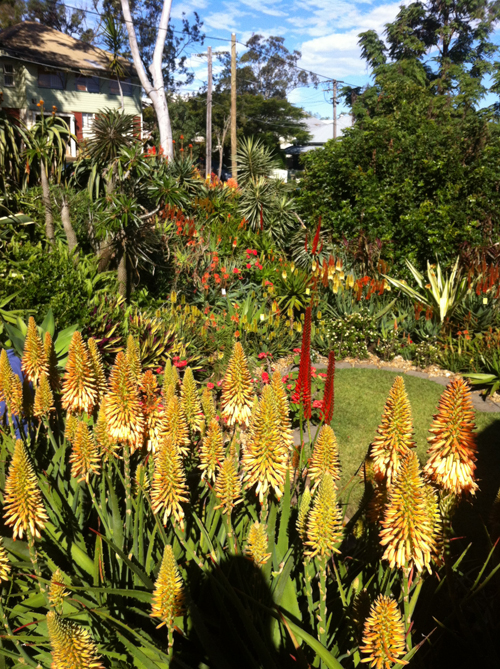
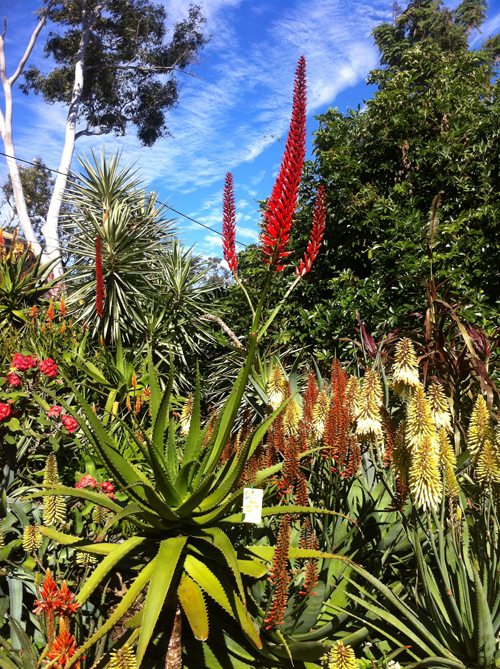
Helen Young's tip-off in the Weekend Australian led me to a nearby garden, open to the public over the weekend as part of the Open Gardens Australia scheme. After a few rainy days, un-characteristic for our Brisbane winters, the sun returned to light up this unusual garden.

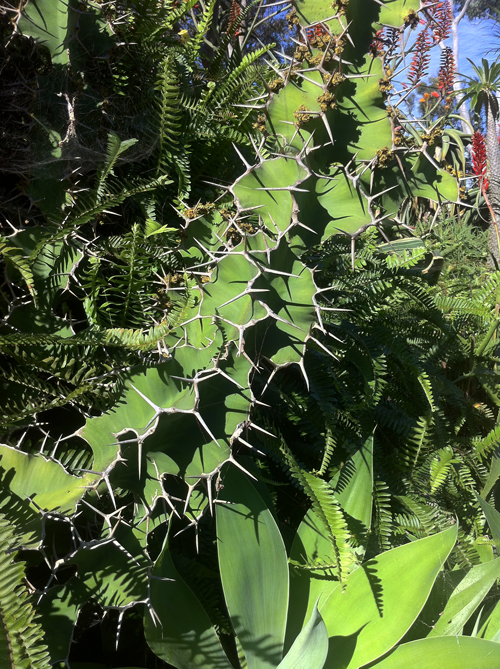
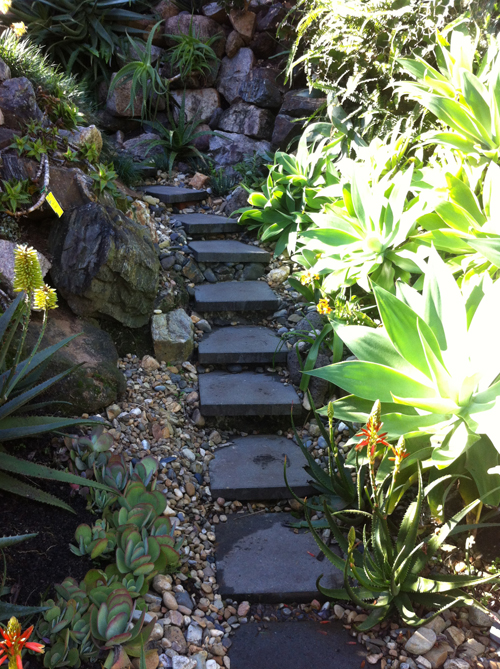
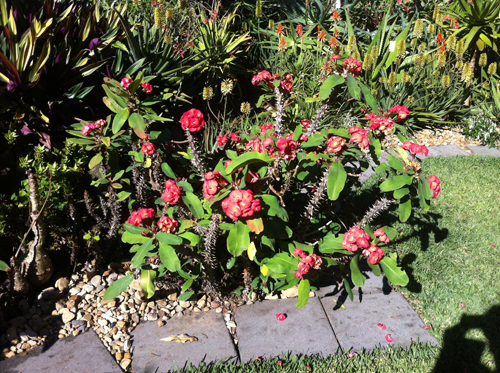
A small steep block showcasing over 50 new types of colourful Aloes. These drought resistant sculptural plants with their spiky conical leaves are not unfamiliar, but these spectacular blooms, mass plantings and stylish companion plantings felt like a riot. 

Garden owners Michael & Alexandra Dent certainly do know what they are about, Michaels company Aloe-Aloe markets and distributes this premium collection of Aloes in Australia. Michael was on hand to advise on selection and I came away with four new plants which will add drama to our garden.


Sunday, January 29, 2012

Black Pekin Bantams


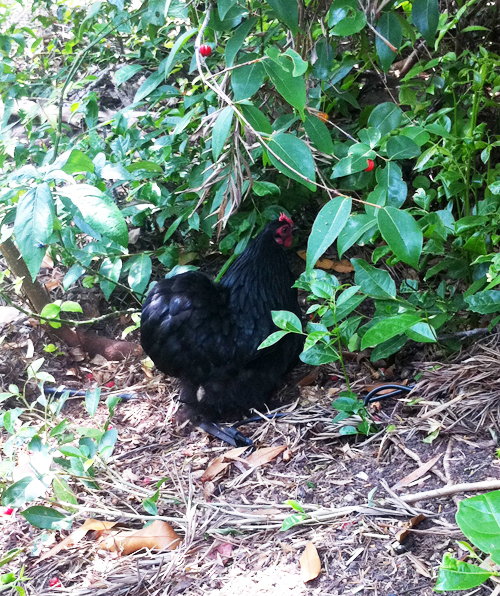
Two new hens have brought the number of my little backyard flock to six again. Pekin Bantams are docile birds, well suited to discrete free range living in a suburban garden. 


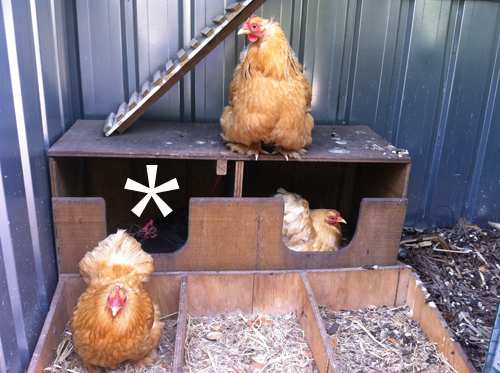
The new 'girls' layed a couple of eggs on arrival then promptly went broody. This is a natural part of their cycle they stop laying and just sit on the nest - its all about hatching the eggs. Quite often the other laying hens will favour the broody's nest, slip in beside the sitting hen, lay their egg then leave and get on with their day - its all very co-operative.

Sunday, January 1, 2012

The Life of the Bee - Maurice Maeterlink


Intrigue has prompted me to find out more about the new arrivals, so this book, seemingly waiting in my bookcase for this moment, is now providing a rather florid insight into the hidden workings of the hive. Written in 1901, The Life of the Bee by the Symbolist poet and essayist Maurice Maeterlink does not purport to be 'a treatise on apiculture, or on practical bee-keeping'. Far from it, in writing of the 'spirit of the hive' the language is that of rapture and heroics. What startling synchronicity, since I have just finished reading A.S. Byatt's Possession, a story situated in just the same era -that is the late 19th century and the Romantic Poets. 

A Beehive in the Garden

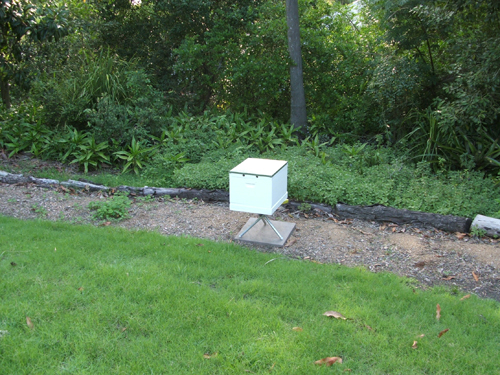
A month ago, seeking to expand his holdings, Dimitar placed one of his beehives in our garden. This insect agistment arrangement is of mutual benefit and enables me to learn more about 'the Bee', always a favorite symbol of mine. We aimed to position the white box somewhere away from the house, the chook pen and the dog's yard and decided on a section of the the path, one of the few level surfaces on our steep sloping block. Without fuss, he installed the gently humming hive one morning shortly after dawn, then we watched, standing a good way back, as he removed the strip of wood which sealed the entrance. Immediately the first bees emerged and flew up in spirals to reconnoitre the new surrounds.