Saturday, August 3, 2013

Winter Pano

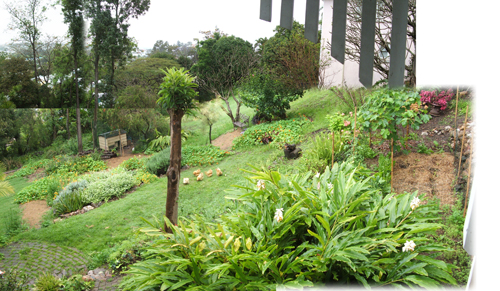
Although I wasn't in Tunbridge this time to see this, Mal's photos stitched together in this pano say it all - all is quiet now in the winter garden. Jack Frost is a regular visitor in the Midlands right through well into the spring season - so often as not the early blossom on our fruit trees will be burnt by the frost and then the fruit can't develop.


Wednesday, June 26, 2013

Winter Solstice 2013

On the evening of June 21st each year at dusk we light a fire. Usually a day or so before we will post a reminder to friends - to come and write your wish on a piece of paper and toss it into the flames. Somehow these 'turns in the tide' of our solar year hold a special charge - and the shortening days of winter (even here in the sub-tropics) conjure expressions of letting go, but also of hope.... for the sun to return and for new beginnings.


Wednesday, May 8, 2013

The Plant Sitter


The Plant Sitter - written by Gene Zion, illustrated by Margaret Bloy Graham (1959).
This charming picture story is from a collection of vintage books posted here
my vintage book collection (in blog form).: The Plant Sitter - illustrated by Margaret Bloy Gr...

Monday, April 1, 2013

Thistle's paradise


No maintenance here since Spring when our gardeners left for the mainland.
After the hot dry summer all these weeds are ripe to drop their seeds -


These little Cox's Orange Pippins are also nearly ripe, the first crop!


The silver birch are leafy enough to cast shade. So hardy, no irrigation line here.


Dogwood, dog and me.


 Elm suckers sprouting - a stressed tree's survival strategy


Saturday, March 30, 2013

a few words on the Midlands Landscape


Barbara Heath - her opening speech (text) for “The Tasmanian Landscape” Handmark Gallery, delivered 6:00pm Friday 15/3/2013.
Our Tasmanian home is in the Midlands - it’s a landscape of sparse trees - you can see the form of the land - the horizon of low rounded hills - and sky, lots of sky. Its all about space - distant views and light. The structure of the land is animated by the shifting play of light from this huge sky. We live a kilometer from the Salt Pan Plains - a landscape made famous by the Tasmanian artist: Bea Maddock - her powerful work *tromemanner - forgive us our trespass I-IV describes the physicality and history of this area. Interestingly - the painting
is owned by the Queensland Art Gallery so we were already familiar with her record of this important aboriginal place. We keep a postcard of this painting in our house in Tunbridge, it feels like a touchstone to us - an object that helps us connect to the spirit of this place.
Jewellery is also a touchstone - a physical thing - worn so close to the body. These precious little objects can be so important to us in a wordless way, carry private meanings.
This year is my 40th anniversary of being a jeweller - I’ve been reflecting (as you do) - in the beginning it was all about reinventing the wheel - creating
a vocabulary of shapes and forms - sculpture on the body. It was all about
new ideas, over time - it has become the consolidation of those ideas - about refinement and deepening into the real nature of jewellery - how it functions and feels as much as how innovative it might be. Intrinsic beauty and generosity of materials - the heft and solidity of a handmade object - the evidence of the workmanship. Now I can trace the lineage of each shape and detail in this

work - how one form or solution begat another - how historical research has introduced complexity and texture - how one colour combination excited the next.
In between working on the house or seeing a bit more of the island - each visit Malcolm and I further our tinsmith research - this time it was the West Coast + tin mining, Zeehan and Waratah . . . my mother came from Devonport,
her mother from Waratah - from Cornish tin miners. I have a deep genetic connection to this place - I suppose I’m here mining that? I’m interested in the transference of skills over time - transposing genes to memes . . .

But it is also important to recognise the role the gallery plays in this - the relationship of artist to gallery - its almost an old fashioned idea - and one that we might be in danger of leaving behind. The gallery is this conduit that enables - a culture-making vehicle. And that’s worth celebrating. So cheers - and enjoy the work!
Barbara Heath - Jeweller to the Lost 15/3/2013
http://www.handmarkgallery.com/exhibitions-Hobart/Hobart.php http://www.daao.org.au/bio/bea-maddock/biography/ http://collection.qagoma.qld.gov.au/qag/imu.php?request=display&port=45000&id=4 77d&flag=ecatalogue&offset=0&count=default&view=details 

Tuesday, January 1, 2013

Goodbye Primrose Street

Impressionist view of my friends Su & John's garden . . 
they are off to a new house garden job and city - including their family of two cats and numerous chickens.


Sunday, September 23, 2012

Tunbridge sixteen


Visit sixteen in early Spring, this time we were welcomed with wild and cold equinoctial winds on the first night of our arrival. Loud bangs and scrapes kept us alert in our bed during the night. Brisbane has cathartic thunderstorms but Tunbridge has wild, wild winds - and once again we thrilled at the differences between our two 'homes'. Green, wet, windy and cold - the morning brought bright sun and these sweet arrivals;
Muscari or Grape Hyacinth - those little garlic sized bulbs that often turn up when weeding I'm glad to see they have survived last summer's hasty re-burial in this spot. 


Apricot, the first of the espaliered trees to blossom, though the frosts that are sure to follow will usually spoil any chance of these flowers developing into fruit - this sight is charm enough.


Two survivors, Blue Fescue grass and Rosemary - looks like I should plant more of these.


Sunday, July 15, 2012

Winter colour

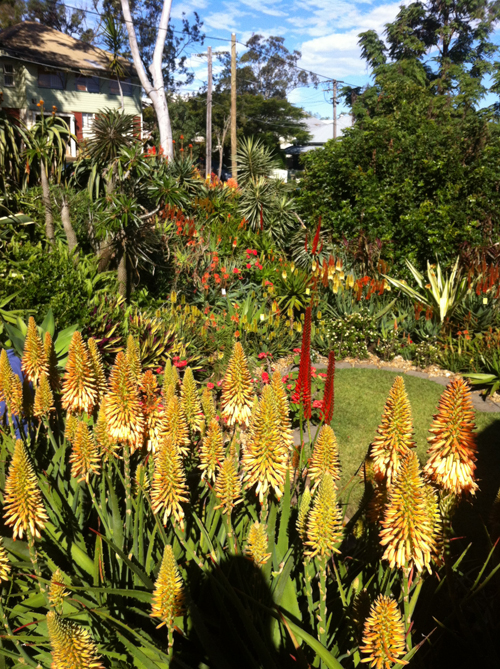
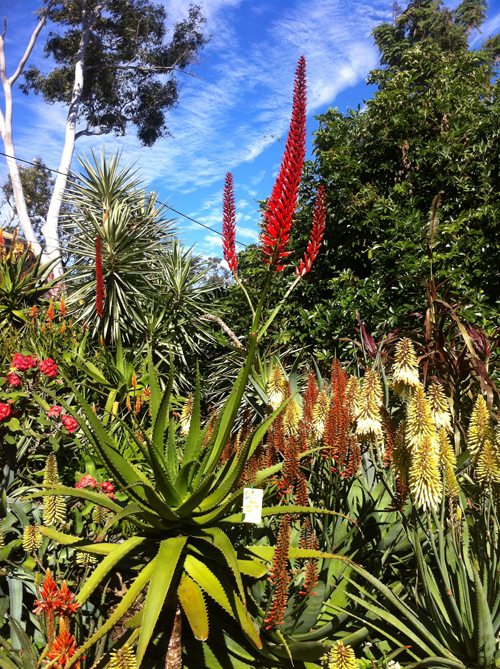
Helen Young's tip-off in the Weekend Australian led me to a nearby garden, open to the public over the weekend as part of the Open Gardens Australia scheme. After a few rainy days, un-characteristic for our Brisbane winters, the sun returned to light up this unusual garden.

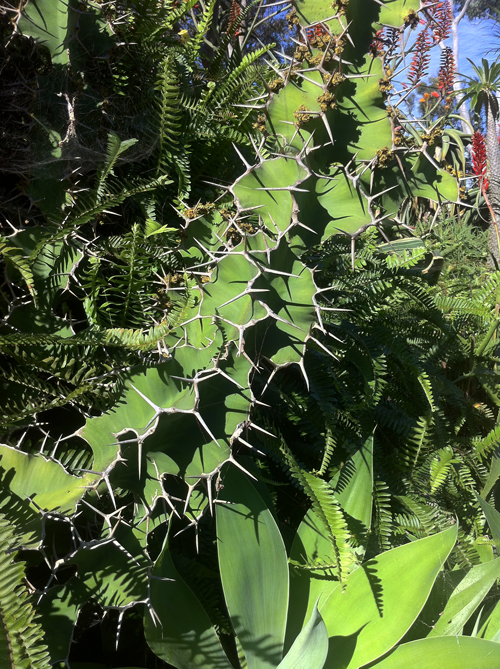
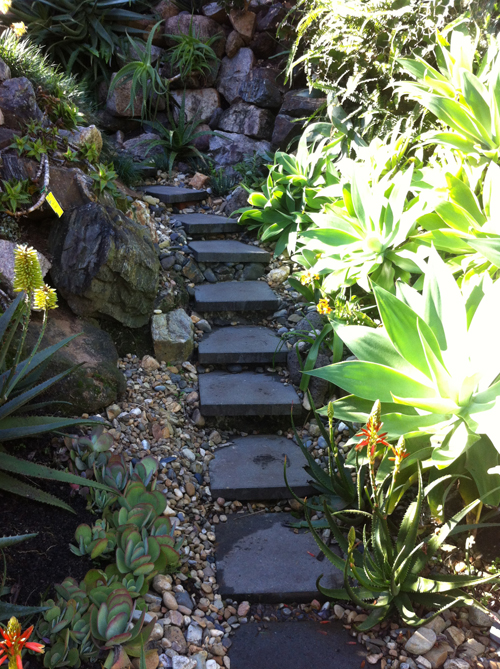
A small steep block showcasing over 50 new types of colourful Aloes. These drought resistant sculptural plants with their spiky conical leaves are not unfamiliar, but these spectacular blooms, mass plantings and stylish companion plantings felt like a riot. 

Garden owners Michael & Alexandra Dent certainly do know what they are about, Michaels company Aloe-Aloe markets and distributes this premium collection of Aloes in Australia. Michael was on hand to advise on selection and I came away with four new plants which will add drama to our garden.


Sunday, January 29, 2012

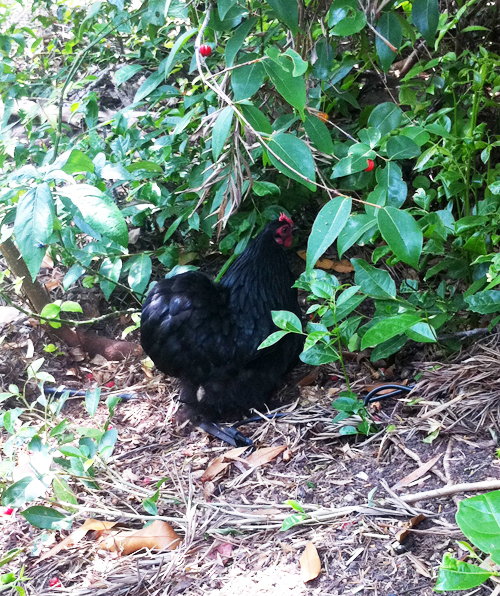
Black Pekin Bantams


Two new hens have brought the number of my little backyard flock to six again. Pekin Bantams are docile birds, well suited to discrete free range living in a suburban garden. 


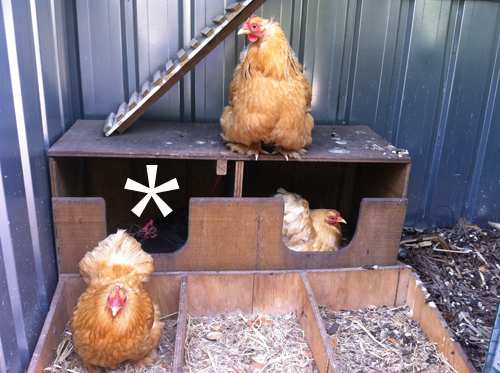
The new 'girls' layed a couple of eggs on arrival then promptly went broody. This is a natural part of their cycle they stop laying and just sit on the nest - its all about hatching the eggs. Quite often the other laying hens will favour the broody's nest, slip in beside the sitting hen, lay their egg then leave and get on with their day - its all very co-operative.

Sunday, January 1, 2012

The Life of the Bee - Maurice Maeterlink


Intrigue has prompted me to find out more about the new arrivals, so this book, seemingly waiting in my bookcase for this moment, is now providing a rather florid insight into the hidden workings of the hive. Written in 1901, The Life of the Bee by the Symbolist poet and essayist Maurice Maeterlink does not purport to be 'a treatise on apiculture, or on practical bee-keeping'. Far from it, in writing of the 'spirit of the hive' the language is that of rapture and heroics. What startling synchronicity, since I have just finished reading A.S. Byatt's Possession, a story situated in just the same era -that is the late 19th century and the Romantic Poets. 

A Beehive in the Garden

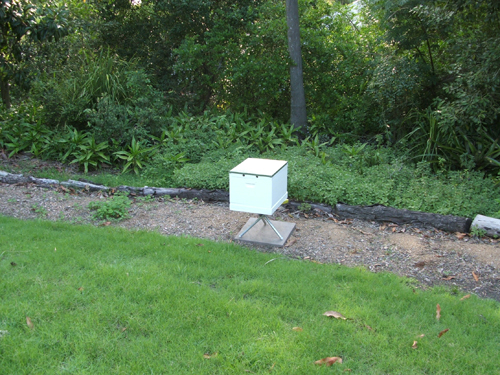
A month ago, seeking to expand his holdings, Dimitar placed one of his beehives in our garden. This insect agistment arrangement is of mutual benefit and enables me to learn more about 'the Bee', always a favorite symbol of mine. We aimed to position the white box somewhere away from the house, the chook pen and the dog's yard and decided on a section of the the path, one of the few level surfaces on our steep sloping block. Without fuss, he installed the gently humming hive one morning shortly after dawn, then we watched, standing a good way back, as he removed the strip of wood which sealed the entrance. Immediately the first bees emerged and flew up in spirals to reconnoitre the new surrounds.

Sunday, October 24, 2010

Free-ranging Bantams


Currently three of our five Buff Pekin Bantams spend most of their day foraging in the garden or resting in the deep and fragrant shade of the Galangal, a plant which has good associations for the little flock. The other two are pre-occupied with secret egg business in the dark of the chook house. On this batch of hens arrival, two and a half years ago, the chook pen encompassed this vigorous ginger plant and they would make dust baths or occasionally lay an egg or two, if the available nest boxes were occupied, between the thick green stems. But this winter I made use of the pen's fertilised soil to plant spinach, beetroot and chinese greens and the hens yard was moved to a new spot.


I'm always charmed by the birds friendly, busy nature and observing their behaviour; noticing how they interact, hunt and forage while keeping an eye out for danger, is endlessly interesting to me. Sometimes I think my affection for the group is like a kind of professional admiration, their seemingly impractical feathered feet and puff pants belie such an impressive operational effectiveness. 
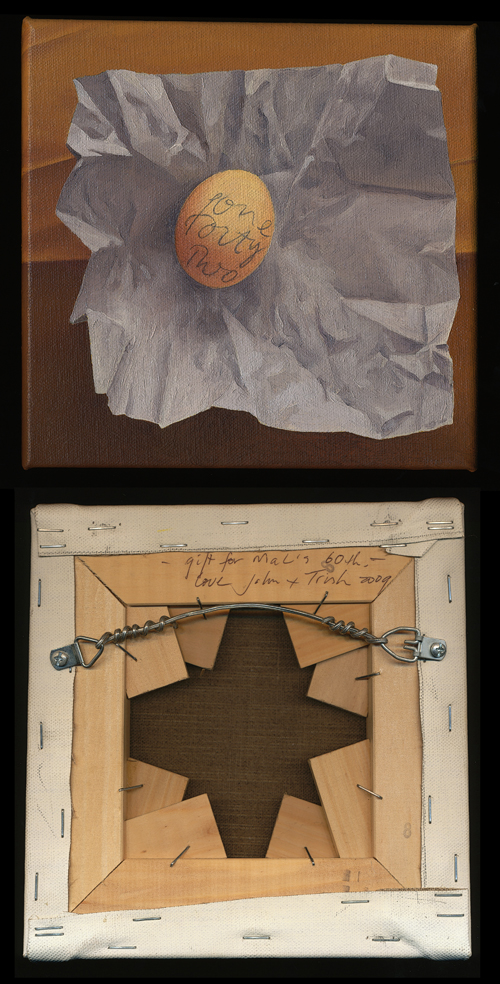
Egg production varies with the seasons and their own cycle - but we never need to buy eggs and often have spare to give away. They don't have names, but come when I talk to them or earnestly follow me to lock them back into safety. We do however pencil a number onto each egg, to know which to eat first and I always prefer when its mal's graphic hand that does the numbering - as you see it was the subject of this still life a 60th birthday gift to mal from our friend, artist John Honeywill.

Sunday, October 17, 2010

Wet Sunday

A patched view of the spare block with the Loquat tree lopped back to allow more sunlight onto the veggie patch. The Galangal starting to flower in the foreground, nasturtiums in full swing and sprawling across the paths and  five buff Pekin bantams foraging in the wet grass.

eye level bird life

Spring comes in with a rush, the first indication of the season change is being woken as early as 4am by the butcher birds. Of course their call is so beautiful, clear and melodious that its easy to listen to as you fall back to sleep. Next clue comes from the cyclists, or rather their bike helmets which begin to sprout sprays of black electrical cable tie bristles -in an attempt to discourage arial attack from the increasingly territorial nesting birds.  Given that the back verandah of our house is at tree top level, we get a close up view of the bird life and inevitably we become emotionally invested in the dramas of the fledging brood.
This season has brought strange weather challenges, with days of wild wind and torrential rain. There must have been some event which compelled the three butcher bird chicks to leave the safety of their nest too soon. Eric the cat brought in no.2 chick early one morning and we managed to re-locate it unharmed to a box tree branch above the back verandah, then watched keenly as the parent bird continue to feed it in it's new spot. Barely had the warm inner glow of knowing we had averted disaster, than Eric brought in no.3 chick, again unharmed, and again we relocated it to the nearest branch. Now of course we have begun to assist the parents by putting out little portions of meat and watch as they ferry the beak-full to each of the three chicks in their various locations.The female comes right up the the plate as we put the food out, so close we can see the lovely whiskers at the edge of her beak. The male hangs back and waits until we move further away.  Obviously the two younger chicks are having some difficulty hanging onto the branch as they seem to keep ending up back on the ground and sure enough Eric brings no. 2, or is it no.3? chick back into the house again the next morning. Now we are desperately involved. We watch as the parents cleverly stash surplus food in the fork of small branches and learn to recognise their strident warning calls as they swoop on unwitting pedestrians on the footpath beside the house. The next night brings torrential rain, the wind blows and we anxiously wonder just how the chicks will fare. In the morning it is clear they have not held onto the branch, but they are vigorously calling out to be fed. Following the sound, we find them in the vegetation below the tree. The smaller chick is wet and weaker now but again we fix them both up onto the branch. Feeding continues but chick no.3 is falling behind, it is just that bit slower now to open its beak, we can see that most of the food goes to no.2 Later in the morning no.3 falls down again, we bring it in and warm and dry its feathers, but a little later the chick dies.


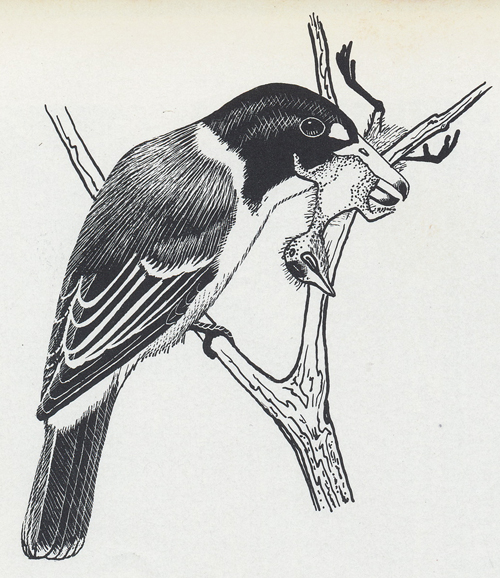
Over the following week the two fledglings strengthen and thrive, despite more wild westerly winds. Now moving from tree to tree and further from our viewing zone, still we can locate them from their calls to the parent birds. This drawing by Peter Slayter reminds us that Butcher Birds are ruthless nest robbers, no doubt they have fed their chicks this season from the noisy miner's nests nearby. If so, then good, all the birds in the area would benefit from a predator to keep the Noisy Miner population in check, their collective strategy of aggression has diminished the once wide range of bird common to this area. 


Sunday, October 3, 2010

BOGI fair 2010

This gathering of the members and followers of Brisbane Organic Growers Inc under the Albion Overpass and aptly situated on McDonald Street is all about organic plants and seeds, rare farm animals, growers competitions and backyard farm stuff. My friend Sue had entered six of her best hens eggs.
We were excited to find Rare Chook man Mark Tully showing young bantams black silkies and plymouth rock. There was a lot of fascination for the big gingerhaired pig, piglets, - a mother and kid long eared Nubian Goat and two vocal Guinea fowl.
wandering the market, collecting a few more culinary plants a jam or two then we headed towards the lush line-up of hopefuls competing inside the Peace Hall.
Now I'm remembering village hall fairs like this my UK childhood - and their closely related buzz event the Jumble Sales.
and wow! Sue's hens eggs have won 2nd prize.
Love those nasturtions in the backgound they are big in my backyard this spring.


Wednesday, August 25, 2010

Bird Haven


Located on a sandstone ridge 40km south of Brisbane with average rainfall 950mm per year and no mains water, this picture shows how abundant a dryland native garden can be. The conditions certainly suit grevilleas and acacias and the bird life that thrives on their flowers. The owners say they are unashamed collectors of native plants but despite an extraordinary tally within one hectare, there was a soft feathery gentleness to this AOGS garden. With most of the planting beneath eucalypts, the ambient light was soft and animated, but the 'fabulous bones' of large sandstone boulders and outcrops really made the bushland scene seem quite magical. I recognised a couple of favorites; trailing purple flowered hardenbergia - which I have just planted from cuttings taken from a tough old survivor beside the shopping centre carpark and Hovea or purple pea bush which is native to our hillside. 


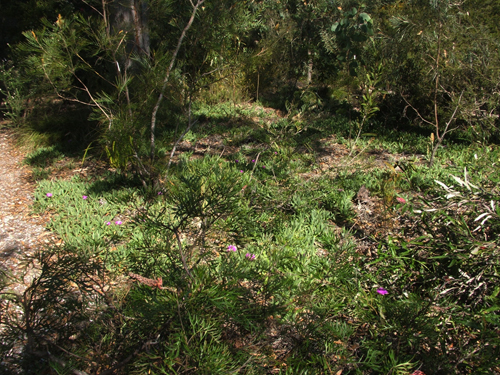
Again I love this use of the succulent, Pig Face which seems to survive anywhere and looks so comfortable as a ground cover. I loved walking through this garden, it was rowdy with birds, sheltered and discretely colourful. Worth the long drive to get there.

Monday, July 26, 2010

Bok Choy beginners luck?

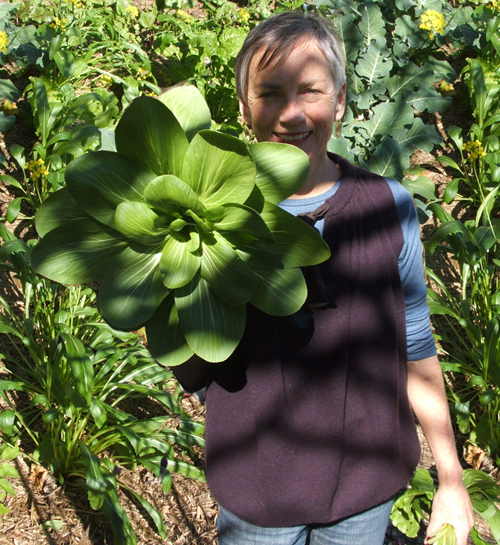
If this was the best bok choy ever, should I have let it seed. Too late its eaten.
All the green loot in the background was planted in the well aged patch that the bantams have occupied for the last 3 years. Good conditions for our winter crop, which thrived and grew throughout the shortest days - a surprising counterbalance to the lack of action in the garden now.

Thursday, July 1, 2010

What is home anyway?

On the meaning of home, when Gertrude Stein returned to the US after an absence of 30 years she wrote: 'Roots are so small and dry when you have them and they are opposed to you. You have seen them on a plant and sometimes they seem to deny the plant if it is vigorous....... Well we're not like that really. Our roots can be anywhere and we can survive, because if you think about it we take our roots with us. I always knew that a little and now I know it wholly. I know because you can go back to where they are and they can be less real to you than they were three thousand, six thousand miles away. Don't worry about your roots so long as you worry about them. The essential feeling is to have the feeling that they exist, that they are somewhere. They will take care of themselves and they will take care of you, too, though you may never know how it has happened. To think of only going back for them is to confess the plant is dying.'

Saturday, June 26, 2010


Tunbridge garden mid winter - just a few days before winter solstice. The Tamarisk, so dense in summer - is now brown and see through. The Pin Oak in the foreground, planted this summer, still has its autumn leaves, while several plants have touches of frost burn. The pencil pines are so full of roosting starlings each night - is that why the branches keep bending out ? Not much to do - it feels like everything is asleep.

Tuesday, March 2, 2010

Summer 2010


On arrival at each visit to our house in Tasmania, the first excited circuit of inspection invariably takes in all the changes in the garden. Here's the first in our row of heritage fruit trees bursting with foliage, if not fruit. This one is the Plum, Coe's Golden Drop. The top image was taken one year after planting in 2006. The trees as well as the instructions on how to espalier them came from Bob Magnus at Woodbridge Fruit Trees. Like most plant nurseries the very mention of our location in Tunbridge, often described as the driest location in Tasmania, usually elicits groans of despair. But this year's drought breaking rain has changed the midlands landscape and brought lush growth to the region.